Intense desert light can bleach colours, raise indoor temperatures and place heavy demands on every surface. Understanding these forces helps create interiors that stay comfortable, durable and visually balanced year after year.
Dubai’s bright skies and extreme temperatures shape daily life more than many realise. From midday glare pouring through large windows to the constant need for cooling, the environment influences everything from colour choices to fabric selection.
Successful interior design Dubai projects respond directly to these conditions. Designers prioritise materials that resist UV damage, surfaces that stay cool underfoot, and layouts that manage light without sacrificing brightness or comfort. The result is spaces that feel calm and practical rather than fighting the climate.
How Desert Light Shapes Modern Interiors
Desert light is strong, direct and present for most of the year. It floods rooms with intensity that can flatten colours, create harsh shadows and cause fading in textiles and finishes. South- and west-facing rooms are especially exposed.
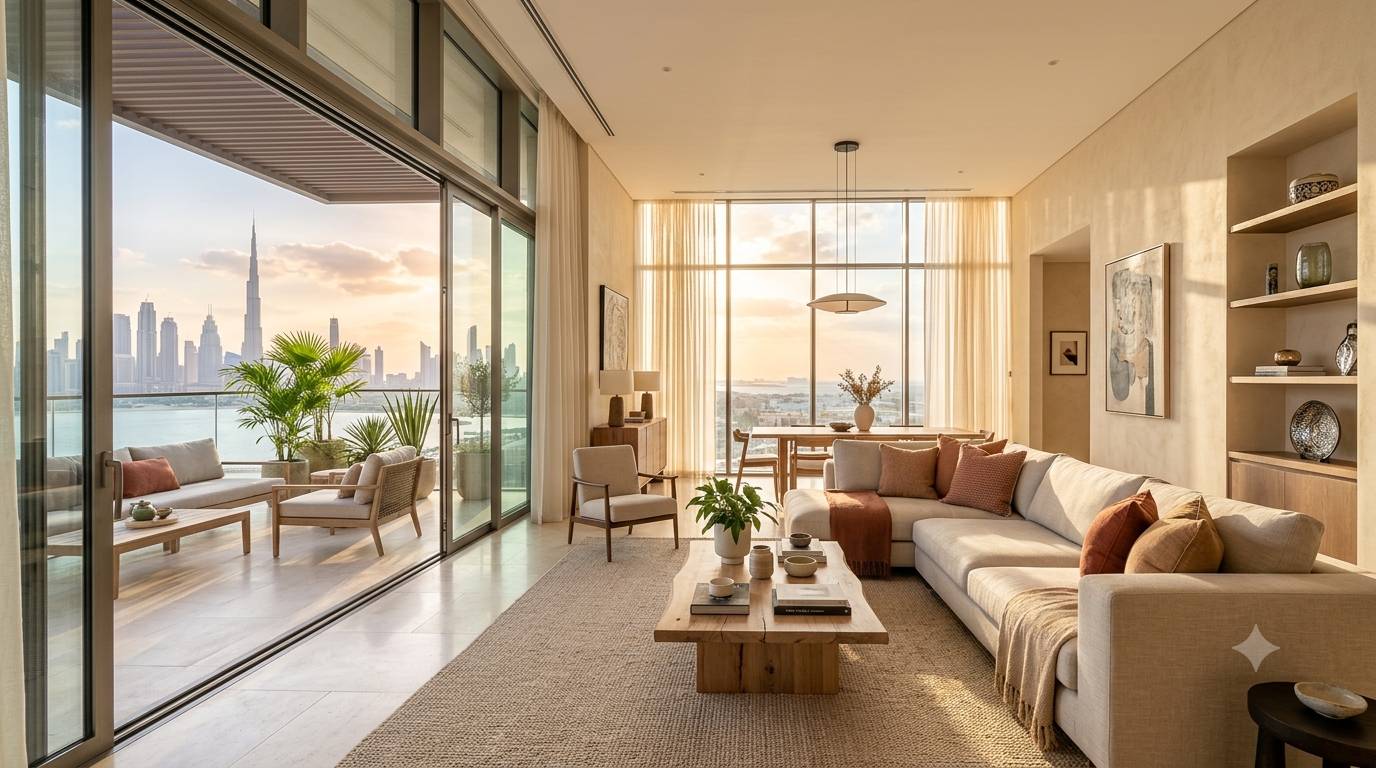
Modern responses focus on control rather than blockage. Sheer curtains, adjustable blinds and external shading devices allow soft daylight while reducing heat gain and glare. Light-reflecting surfaces such as pale stone floors or satin wall finishes help distribute illumination more evenly, reducing the need for heavy artificial lighting during the day.
Layered lighting becomes essential after sunset. Warm ambient sources, wall washers and carefully placed task lights create depth once the intense natural light disappears. This approach keeps interiors usable and inviting from morning until late evening.
How Climate Influences Material Choices
High temperatures, coastal humidity and fine dust place real demands on finishes. Materials that perform well in milder climates can warp, fade or require frequent maintenance here.
Stone and large-format porcelain tiles remain popular for floors because they stay cooler and resist moisture. Engineered woods selected for dimensional stability cope better with air-conditioning cycles than solid timber. Performance fabrics with UV inhibitors protect upholstery and curtains from bleaching. Wall finishes such as microcement or high-quality paints formulated for high UV exposure maintain their appearance longer.
Natural textures—honed stone, brushed timber, linen and plaster—also help. They absorb and diffuse light gently, avoiding the hard reflections that polished surfaces can produce under strong sun. These choices support both comfort and longevity.
Practical Design Strategies for Comfort and Longevity
Thoughtful planning reduces heat load and improves everyday living. Consider these practical steps when updating or fitting out a space:
- Orient furniture and seating away from the strongest direct sun paths where possible.
- Specify double or high-performance glazing and solar-control films on large windows.
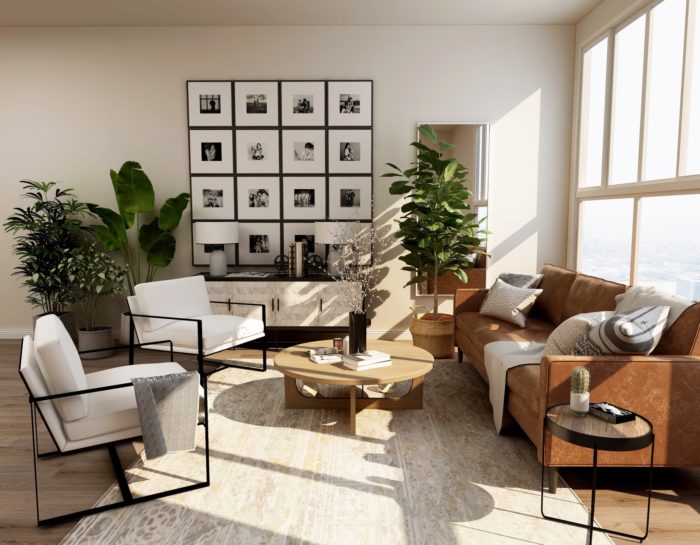
- Choose light-to-mid tone colour palettes—warm whites, soft sands, greiges and muted earth tones—that reflect rather than absorb heat.
- Integrate cross-ventilation routes and ceiling fans to support air-conditioning.
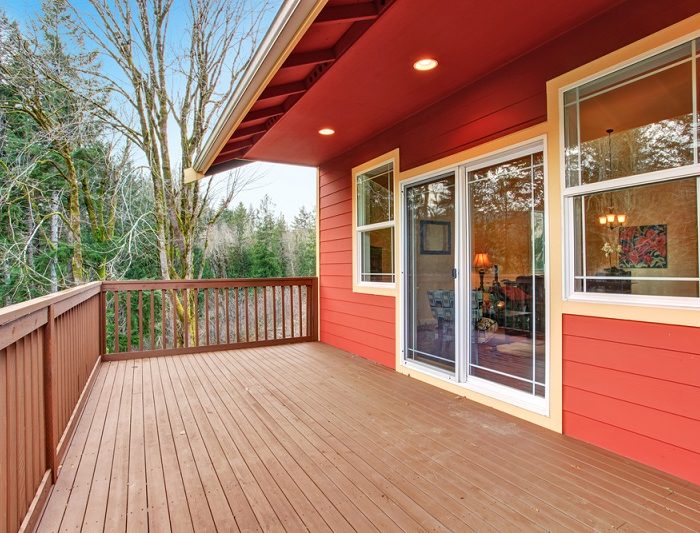
- Select outdoor-rated materials for terraces and covered loggias so indoor-outdoor flow remains seamless.
- Plan storage and soft furnishings with easy-clean surfaces that handle dust.
These decisions work together. A pale floor reflects light deeper into a room while staying cooler underfoot. Proper shading lowers cooling demand and protects furnishings. The combined effect is a home that feels more comfortable with less effort.
Balancing Openness with Protection
Many Dubai homes feature expansive glazing to capture views of the skyline, sea or golf course. The challenge is enjoying those views without turning the interior into a greenhouse.
Designers often combine fixed and operable shading, deep reveals, and internal screens that can be adjusted by time of day. Biophilic elements—living plants in well-lit zones, natural materials and water features in protected areas—add visual softness and psychological relief from the external intensity. Outdoor living spaces are treated as true extensions of the interior, with durable flooring, weather-resistant seating and controlled lighting that allow evening use even in hotter months.
When Professional Advice Proves Useful
Complex projects involving structural changes, extensive glazing or full villa fit-outs benefit from experienced guidance. Professionals familiar with local conditions can specify materials tested for the region, coordinate shading solutions and ensure finishes perform over time. They also help navigate practical issues such as dust management and the interaction between air-conditioning systems and material expansion.
FAQs
Q.1 How does desert light affect colour choices in Dubai homes?
Ans: Strong sunlight can bleach saturated colours and create glare. Lighter, warmer neutrals and earth tones reflect light more gently and hold their appearance longer under intense UV exposure.
Q.2 Which flooring materials perform best in Dubai’s climate?
Ans: Porcelain tiles, natural stone and carefully selected engineered woods resist heat, humidity and dust better than many solid timber options while staying cooler underfoot.
Q.3 Why is shading so important in modern Dubai interiors?
Ans: Effective shading reduces heat gain, protects furniture from fading and softens harsh midday light, making rooms more comfortable and energy-efficient without blocking daylight entirely.
Q.4 Can open-plan layouts work well in the desert climate?
Ans: Yes, when combined with zoning through furniture, screens or level changes, plus good control of sunlight and airflow. This maintains openness while managing temperature and glare.
Q.5 What role do natural textures play in climate-responsive design?
Ans: Textures such as honed stone, plaster and natural fabrics diffuse strong light, add visual warmth and help interiors feel calmer and more tactile under the bright desert conditions.
Key Takeaways
Desert light and climate are not obstacles to good design; they are the conditions that give Dubai interiors their distinctive character. By choosing materials that resist UV and heat, managing sunlight thoughtfully and prioritising comfort alongside appearance, homes become more enjoyable and practical over the long term.
Focus first on how light moves through each room and how surfaces respond to heat and dust. Simple, considered decisions at the planning stage deliver lasting results that feel right for the place.