You turn on the furnace expecting warm air, but the house still feels cold. Maybe the system starts running but doesn’t seem to produce enough heat, or it turns on and off without warming the rooms properly. These problems can be frustrating, especially when temperatures drop and you rely on your furnace to keep the home comfortable.
There are several reasons a furnace may stop heating properly, and not every issue means the entire system needs to be replaced. Some problems are connected to airflow or basic maintenance, while others involve components that need closer attention. Understanding the most common causes of heating problems, including common gas furnace repair issues, can help you recognise when your furnace needs to be checked.
A Dirty or Clogged Air Filter
One of the simplest things to check is the furnace filter. Over time, dust and other particles can collect on the filter and restrict the amount of air moving through the system.
When airflow is reduced, the furnace may have to work harder to circulate warm air. In some cases, restricted airflow can also cause the system to shut down as a safety measure. Checking the filter regularly and replacing it according to the manufacturer’s recommendations can help maintain proper airflow.
Problems With the Thermostat
The thermostat controls when the furnace turns on and how warm the home should become. If the thermostat isn’t reading the temperature correctly or isn’t communicating properly with the heating system, the furnace may not operate as expected.
Before assuming there’s a major furnace problem, check that the thermostat is set to heat and that the temperature setting is above the current room temperature. If it uses batteries, replacing them may also be worth trying. If the thermostat still isn’t working correctly, the issue may require further inspection.
Issues With the Ignition System
A gas furnace needs a reliable ignition process to produce heat. Depending on the furnace, this may involve an electronic ignition system or another type of ignition component.
If the ignition system develops a fault, the furnace may start its cycle without producing warm air. You might hear the system attempting to start, but the burners don’t remain on. Because gas and ignition components can involve safety concerns, this type of problem is best assessed by a qualified professional rather than handled through trial and error.
Restricted Airflow Can Affect Heating
Even when the furnace itself is producing heat, that warm air needs to move through the home. Blocked vents, closed registers, dirty filters, or problems within the ductwork can interfere with airflow.
Signs that airflow may be part of the problem
- Some rooms stay colder than others: If certain areas consistently receive less warm air, there may be an airflow restriction or distribution issue that needs to be investigated.
- Air from the vents feels weak: Weak airflow from several vents can indicate a problem that goes beyond one blocked register, particularly if the change happened suddenly.
Checking that vents are open and unobstructed is a useful first step. If airflow remains weak after basic checks, the ductwork and furnace may need a closer look.
The Furnace May Be Overheating
A furnace can overheat when it can’t move enough air through the system or when another component isn’t working properly. When this happens, a safety mechanism may shut the furnace down to prevent damage.
You may notice that the furnace runs for a short period, stops, and then starts again later. This repeated cycling can leave the home underheated even though the furnace appears to be running. A dirty filter is one possible cause, but repeated overheating can have several explanations and shouldn’t be ignored.
Burner Problems
Gas furnace burners need to operate properly for the system to produce consistent heat. Dirt or other issues affecting the burners can interfere with normal operation.
If the burners aren’t functioning correctly, the furnace may produce less heat than expected or fail to complete its heating cycle. Because working around gas equipment can be dangerous, burner-related problems should generally be left to a qualified technician who can inspect the system safely.
A Faulty Blower Motor
The blower motor is responsible for moving heated air through the ductwork and into the rooms of the home. If the blower isn’t operating correctly, the furnace may produce heat without distributing it effectively.
A failing blower can sometimes produce unusual sounds or result in weak airflow from the vents. Since the blower is an important part of the furnace’s operation, a persistent problem should be inspected rather than repeatedly restarting the system.
Problems With the Flame Sensor
A flame sensor helps the furnace determine whether the burner flame is present. If the sensor becomes dirty or develops a fault, the furnace may shut the burners off even though the system is trying to heat the home.
This can result in a furnace that starts normally but stops heating shortly afterwards. A dirty sensor may sometimes be involved, but because the component is part of the furnace’s safety system, it is better to have the issue properly diagnosed before attempting repairs.
When the Furnace Keeps Turning On and Off
A furnace that repeatedly starts and stops may be experiencing a number of different problems. Restricted airflow, thermostat issues, overheating, or component faults can all contribute to short cycling.
This behaviour isn’t something you should simply ignore because the furnace eventually starts again. Frequent cycling can prevent the home from reaching a comfortable temperature and may indicate that the system isn’t operating as it should. Paying attention to how often the furnace cycles can provide useful information when the system is inspected.
When It’s Time to Have the Furnace Checked
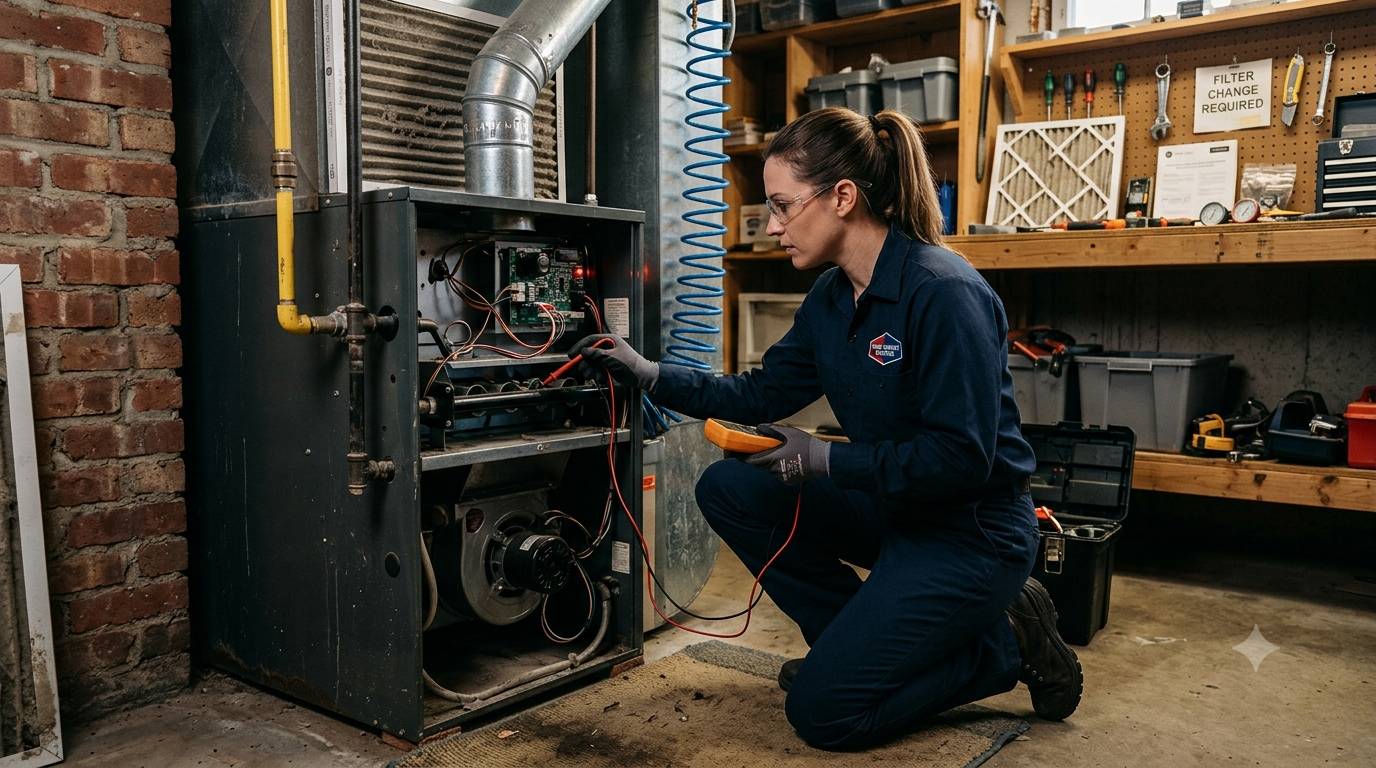
Some basic checks, such as looking at the thermostat or replacing a dirty filter, are reasonable for homeowners. Problems involving gas connections, burners, ignition components, electrical parts, or internal safety controls are different.
If the furnace isn’t producing heat, repeatedly shuts down, makes unusual noises, or behaves differently from normal, getting the system checked can help identify the actual cause. It’s better to find out why the furnace isn’t working properly than to keep restarting it and hoping the problem disappears.
Final Thoughts
A furnace that stops heating properly can have several different causes, and the right solution depends on what is happening inside the system. A dirty filter, thermostat problem, or blocked vent may be easier to address, while issues with the ignition, burners, blower motor, or safety components require more careful attention. Paying attention to unusual sounds, weak airflow, short cycling, or a noticeable drop in heating performance can help you recognise when something isn’t right. Regular maintenance and timely inspections can help keep your furnace running efficiently and reduce the chance of an unexpected heating problem during colder weather.